
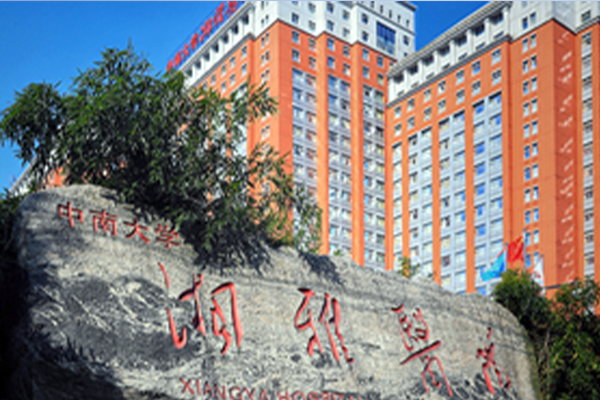
Founded in 1906, Xiangya Hospital of Central South University is a Grade A tertiary general hospital directly administered by the National Health Commission and an affiliated hospital of Central South University, a "Double First-Class" university directly under the Ministry of Education. It serves as a crucial national hub for clinical diagnosis and treatment, medical education, and scientific and technological innovation, and has earned widespread recognition at home and abroad for its sophisticated medical expertise, outstanding scientific and educational capabilities, and profound cultural heritage.
Historical Origins and Cultural Heritage
In the early 20th century, alumni of Yale University in the United States established the Yale-China Association, with the mission of promoting medical and educational initiatives in China. In 1906, Dr. Edward H. Hume was dispatched by the Yale-China Association to found Yale Hospital (the predecessor of Xiangya Hospital) at Xipailou in Changsha and served as its first president In 1914, the Hunan Yuqun Society collaborated with the Yale-China Association to establish Hunan-Yale Medical College (initially named Hunan-Yale Medical Professional School), China's first Sino-American co-founded institution of higher medical education. Dr. Yan Fuqing, a surgeon at Yale Hospital, was appointed as the first president, and the hospital was officially renamed Xiangya Hospital, where "Xiang" is the abbreviation of Hunan Province and "Ya" is the phonetic translation of "Yale".
From its humble beginnings with only 14 beds at the Xipailou campus, Xiangya Hospital has adhered to the highest standards of Western medical construction and management since its establishment. It has nurtured numerous pioneers and founders of modern Chinese medicine, such as Zhang Xiaoqian, a renowned medical scientist known as the "Titan of Peking Union Medical College and the Sage of Xiangya" and one of the first academicians of the Chinese Academy of Sciences; Tang Feifan, a world-famous medical microbiologist hailed as the "Father of Chlamydia" and the "Father of Chinese Vaccines"; and Li Zhenpian, a prominent virologist and an envoy of Sino-American exchanges. The hospital has written an important chapter in the history of the development of Western medicine in China.
Development Strategy and Core Strengths in the New Era
Guided by Xi Jinping Thought on Socialism with Chinese Characteristics for a New Era, Xiangya Hospital has steadfastly pursued an accelerated, leapfrog, connotative, and high-quality development path in the new era It has vigorously implemented the "12368" medium- and long-term development strategy and actively promoted the "3354" Xiangya high-quality development model, fully embodying the cultural and value concepts of Xiangya in the new era.
The hospital has achieved remarkable results in various fields, including clinical medicine, medical education, medical research, integration of medical treatment and prevention, hospital management, and social services. It was among the first batch of institutions selected to establish a comprehensive National Medical Center and a pilot unit for the high-quality development of high-level public hospitals directly under the National Health Commission It has also co-established comprehensive and specialized National Regional Medical Centers for neurology, orthopedics, respiratory medicine, and geriatrics with the commission and the provincial government, and undertaken the pilot task of establishing and improving a modern hospital management system The hospital has maintained a top-tier A++ rating for five consecutive years in the performance evaluation of tertiary public hospitals nationwide, with its best ranking being 6th in China and 1st in Central China It has been awarded the May 1st Labor Certificate.
Medical Services and Disciplinary Advantages
Scale and Efficiency: The hospital has 3,500 authorized beds, 111 clinical, medical, and technical departments and sub-specialties, and 103 nursing units In 2024, it provided outpatient and emergency services to 3.47 million patients, admitted 167,000 inpatients, and performed 85,000 medium and large-scale surgeries.
Disciplinary Strength: It currently houses 7 national key disciplines and 38 national key clinical specialties (including construction projects) Specialties such as Neurology, Neurosurgery, Orthopedics, Respiratory and Critical Care Medicine, Geriatrics, Dermatology, Pathology, Critical Care Medicine, Health Management, Sports Medicine, Otorhinolaryngology - Head and Neck Surgery, Clinical Pharmacy, Burn Surgery, and Rheumatology and Immunology rank among the top in China in terms of diagnosis and treatment capabilities and professional influence.
Innovative Medical Practices: Over the past five years, the hospital has taken the lead in formulating 66 domestic guidelines and expert consensuses, and carried out 7 internationally pioneering technologies and 6 domestically pioneering technologies It has also equipped itself with a large number of advanced medical devices, including 7.0T MRI, PET-MRI, PET-CT, Digital Subtraction Angiography (DSA), BrainLab Neuronavigation System, and Da Vinci Surgical Robots, ensuring first-class diagnosis and treatment conditions and standards.
Talent Team and Medical Education System
Talent Pool: The hospital has 5,428 professional and technical personnel, including 1,171 senior professionals, with 88.6% of physicians holding doctoral degrees It has 200 doctoral supervisors and 567 master's supervisors, as well as 1 academician of the Chinese Academy of Engineering, 2 recipients of the National Innovation Award, 70 person-times of national high-level talents, 7 young and middle-aged experts with outstanding contributions recognized by the National Health Commission, 62 professors enjoying special allowances from the State Council, and 2 National Advanced Workers.
Education System: The hospital boasts a comprehensive medical education system covering undergraduate and postgraduate degree programs, standardized residency training (SRT), standardized specialist training (SST), and continuing medical education It was among the first batch of institutions designated as a National Clinical Teaching and Training Demonstration Center and a founding member of the Elite Teaching Hospital Alliance for Resident Training in China The number of approved specialist training bases ranks first in the country It has 5 national excellent courses, 4 national excellent resource-sharing courses, and 7 national first-class undergraduate courses Over the past five years, it has compiled 20 national unified textbooks published by People's Medical Publishing House and Higher Education Press The hospital has also won numerous national teaching awards, including the First Prize of National Teaching Achievements, the Special Prize of the National Clinical Skills Competition for Medical College Students, and the First Prize in the Medical Group of the National Young Teachers' Teaching Competition.
Scientific Research Platforms and Academic Achievements
Research Infrastructure: The hospital has 5 national-level innovation platforms, including the National Clinical Research Center for Geriatric Diseases, the National Engineering Research Center for Individualized Diagnosis and Treatment Technologies, the International Joint Research Center for Medical Metabolomics, the National-Local Joint Engineering Laboratory for Anticancer Drugs, and the International Joint Research Center for Endoscopic Minimally Invasive Technology Equipment and Standards It also has 7 ministerial-level platforms and 57 provincial-level platforms.
Research Performance: The hospital ranks 8th in China in the 5-year Accumulated Science and Technology Evaluation Metrics (ASTEM) and has remained among the top 10 in the annual Science and Technology Evaluation Metrics (STEM) for five consecutive years Over the past five years, it has secured 634 projects funded by the National Natural Science Foundation of China, exceeding 100 projects for 8 consecutive years, along with 79 major national projects and 45 national key research and development projects It has also received 47 national and provincial/ministerial-level scientific and technological achievement awards A number of its research findings have been published in prestigious international journals such as Science, JAMA, NEJM, Lancet, and BMJ as the first (corresponding) author institution, and have repeatedly revised international clinical diagnosis and treatment guidelines.
Social Responsibility and Public Welfare Commitment
Emergency Response and Public Health: Upholding the public welfare nature of socialist public hospitals, Xiangya Hospital has repeatedly demonstrated the responsibility and dedication of Xiangya people in emergency rescue, earthquake relief, and the fight against the epidemic It took the lead in establishing a National Mobile Medical Rescue Center for Public Health Emergencies, improved the coordination mechanism between medical treatment and prevention, and set a benchmark for public health emergency response among hospitals It led two medical teams to assist Sierra Leone in combating Ebola, achieving the goal of "zero infection and full recovery" and winning the title of Advanced Collective in the National Ebola Hemorrhagic Fever Prevention and Control Work During the COVID-19 pandemic, the hospital played a vital role in both Hunan and Hubei provinces, focusing on the treatment of critically ill patients, hospital infection control, and daily medical support It promptly dispatched medical personnel to assist in Hubei's pandemic prevention and control efforts, was invited to share its experience at press conferences held by the Joint Prevention and Control Mechanism of the State Council, and received the titles of Advanced Collective and Advanced Individual in the National Fight against the COVID-19 Epidemic.
Medical Consortium and Resource Sharing: The hospital took the lead in developing the "Xiangya Model" of a medical consortium, which integrates six aspects: co-established hospitals, collaborative guidance, remote consultation, specialized alliances, air medical alliances, and regional medical consortia It currently has 16 collaborative guidance hospitals covering 11 provinces and autonomous regions, and 70 designated hospitals for two-way referral covering 14 cities and prefectures in Hunan Province Its telemedicine network connects 929 medical institutions across 30 provinces and autonomous regions in China, with 86% of them being primary and remote medical facilities The hospital is accelerating the construction of the export-oriented National Regional Medical Center for Neurological Diseases (Xiangya Hospital of Central South University in Jiangxi) and was among the first in China to launch an Internet hospital.
Future Development Vision
Under the guidance of Xi Jinping Thought on Socialism with Chinese Characteristics for a New Era, Xiangya Hospital fully implements the spirit of the 20th National Congress of the Communist Party of China and the Second and Third Plenary Sessions of the 20th Central Committee Bearing in mind the "national priorities" and striving to build a "national treasure", the hospital focuses on high-quality development, deepens the reform of public hospitals oriented towards public welfare, and makes every effort to establish a National Medical Center It is committed to fostering new quality productive forces with distinctive Xiangya characteristics, striving to build a world-class hospital with Xiangya characteristics that meets the people's expectations, and making new and greater contributions to the cause of human health.
