
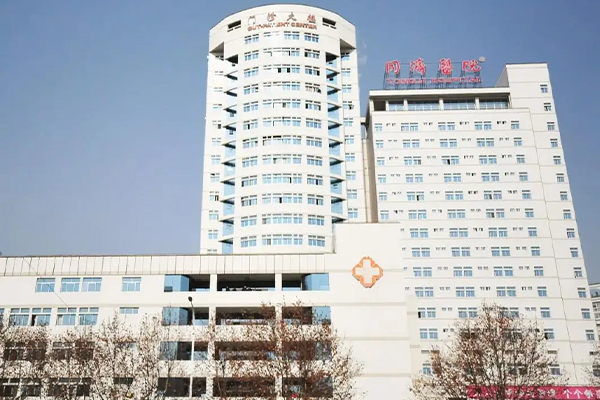
Overview and Century-Old Development
Founded in Shanghai in 1900 by German physician Dr. Erich Paulun, Tongji Hospital moved to Wuhan in 1955. After over 120 years of construction and development, it has now evolved into a modern comprehensive hospital directly administered by the National Health Commission of the People's Republic of China. Integrating medical treatment, education, scientific innovation, public health, and hospital management research, the hospital boasts complete disciplines, a galaxy of distinguished medical experts, a strong teaching faculty, exquisite medical technologies, advanced diagnostic and therapeutic equipment, robust scientific research capabilities, and scientific management methods. Its comprehensive strength ranks among the top tier of hospitals in China.
Distinguished Talent Team
Inheriting the essence of a century-old culture, the hospital nurtures medical masters and elites. It is led by academicians of the Chinese Academy of Sciences (CAS) and the Chinese Academy of Engineering (CAE), with a gathering of renowned physicians and specialists. Among them, Chen Xiaoping was elected as a CAS academician in 2015, and Ma Ding as a CAE academician in 2017. Additionally, more than 80 person-times have been granted various national-level talent program awards, and 98 experts enjoy the Special Government Allowance of the State Council.
Disciplinary Strength and Platform Construction
Emphasizing platform construction, the hospital has strong specialized discipline strength. It currently has four campuses, namely Hankou Campus, Optics Valley Campus, Sino-French New City Campus, and Tongji Junshan Hospital, with 65 clinical and medical technology departments. It serves as a WHO Collaborating Centre for Rehabilitation Training, the National Medical Center for Major Public Health Events, a candidate institution for the development of the National Medical Center (guidance category), the National Clinical Research Center for Obstetric and Gynecologic Diseases, and an output unit for the construction of the national regional medical center co-sponsored by the National Health Commission and the provincial government. It is also a pilot hospital for high-quality development co-constructed by the National Health Commission and the provincial government, as well as a pilot hospital for establishing and improving the modern hospital management system. The hospital has 11 national key disciplines (including 3 nurturing disciplines), 43 national key clinical specialties and construction projects (ranking second nationwide), 1 national key laboratory, 3 key laboratories of the Ministry of Education, 2 key laboratories of the National Health Commission, 7 key laboratories of Hubei Province, 24 Hubei Provincial Quality Control Centers, 16 Hubei Provincial Clinical Research Centers, and 4 Hubei Provincial Engineering Research Centers.
Core Medical Services and Service Capacity
Rooted in Central China and radiating services nationwide, the hospital’s core medical indicators rank among the top in the country and lead the list in Hubei Province. It actively develops new services and builds a new medical service system, with the full-scale construction of "Tongji Cloud Hospital" whose cumulative service volume has exceeded 6.5 million person-times. The hospital has been rated A+ in the performance evaluation of national tertiary public hospitals.
Medical Education Achievements and Heritage
With fruitful achievements in education, the hospital has nurtured numerous outstanding talents. Renowned for its rigorous academic atmosphere, it has cultivated 13 academicians of the CAS and CAE, 3 ministers and vice ministers of the Ministry of Health of the People's Republic of China, and countless pillars of China’s medical field. The late academician Qiu Fazu, honored as the "Modern Medical Sage" of China, is an outstanding representative among them, and his "Qiu’s Ethical Model" is hailed as an immortal monument in the history of medicine. The number of chief and associate editors of national planning textbooks for clinical medicine published by People's Medical Publishing House ranks first among hospitals nationwide. The course Introduction to Medicine has been selected as a model course for ideological and political education by the Ministry of Education, and its teaching team has been recognized as a team of distinguished teachers for ideological and political education.
Scientific Research Innovation and "Tongji Phenomenon"
In scientific research and innovation, the hospital has presented the remarkable "Tongji Phenomenon". It has secured over 100 projects funded by the National Natural Science Foundation of China for 13 consecutive years; in 2017, the number reached 157, ranking first among medical institutions nationwide. Thirteen of its research achievements have won second-class awards at the national level, including the National Science and Technology Progress Award, National Technological Invention Award, and National Natural Science Award.
Management Innovation and Quality Certification
Driven by management innovation, the hospital is committed to building a high-quality hospital. It has launched a series of new management models with distinctive Tongji characteristics, covering medical management, performance management, multi-campus management, and department management, and actively promotes quality certification and the strategy of quality-driven hospital development. In 2012, Tongji Hospital obtained the German KTQ quality certification, and passed the KTQ re-certification in 2015. In 2017, its Department of Surgery was nominated for the 3rd China Quality Award, and the hospital itself won the 7th Wuhan Mayor Quality Award. In 2019, the hospital was awarded the 8th Yangtze River Quality Award of Hubei Province. It has also won the first prize of the Hospital Technology Innovation Award issued by the Chinese Hospital Association twice.
International Cooperation and Cross-Cultural Integration
Embracing internationalization with cross-cultural integration, the hospital has established long-term cooperative relations with more than 70 universities and medical institutions in 25 countries and regions, including Germany, the United States, Japan, France, and Russia.
Public Health Responsibility and Pandemic Response
Standing in solidarity with the nation and the people, Tongji Hospital played a vanguard role in the fight against the COVID-19 pandemic in 2020. It took the initiative to expand its fever clinic capacity by 50 times to receive patients, and pioneered the designation of Sino-French New City Campus and Optics Valley Campus as the main battlefields for pandemic response. The hospital recorded the largest number of intensive care beds, fever patients admitted, and severe cases treated nationwide. It took the lead in releasing the Rapid Guidelines for the Diagnosis and Treatment of COVID-19 in China, and edited 72 guidelines and consensus documents. The "Tongji Model" for severe case treatment was officially promoted by the Medical Treatment Group of the Joint Prevention and Control Mechanism of the State Council. The hospital was honored with the title of "Model of the Times" by the Publicity Department of the CPC Central Committee and "National Advanced Collective in the Fight against COVID-19".
Honorary Achievements and Social Recognition
The hospital has been awarded the title of "National Civilized Unit" for 20 consecutive years, and has successively won honors such as the National May 1st Labor Certificate, Top 10 National Units for Professional Ethics Construction of Staff and Workers, and Advanced Collective of the National Health System. In the 2020 survey on the satisfaction of both medical staff and patients released by the National Health Commission, it ranked first among comprehensive hospitals nationwide.
