
Overview and Core Positioning
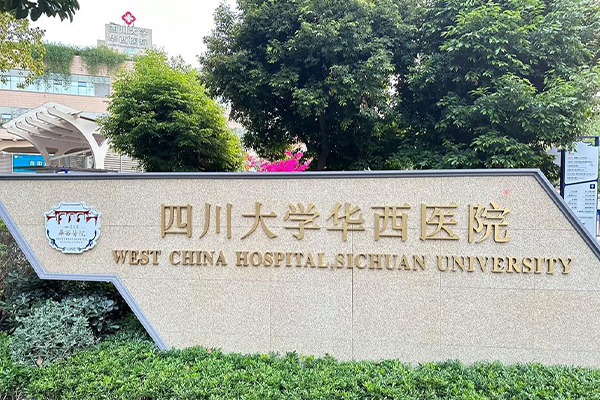
"The spring scenery of Jinjiang overspreads heaven and earth; the floating clouds above Yulei Mountain have witnessed the vicissitudes of ancient and modern times."On Huaxi Dam, near the Wanli Bridge over the Jinjiang River in Chengdu—a renowned historical and cultural city in China—stands a world-famous medical complex, which is none other than West China School of Medicine and West China Hospital of Sichuan University.
West China Hospital of Sichuan University was first established in 1892, while West China School of Medicine of Sichuan University originated from the Medical School of West China Union University founded in 1914. Today, it has grown into a national center for the diagnosis and treatment of difficult, complicated and critical illnesses in western China, a prestigious higher medical education institution in China, and a national-level base for first-class medical scientific research and technological innovation. Its comprehensive strength ranks among the top tier domestically and the advanced level internationally. It is among the first batch of national medical center construction units in China, as well as a pilot hospital for high-quality development co-constructed by the National Health Commission and the provincial government. The hospital has also set up the National Medical Center for Mental Disorders and 2 national regional medical centers.
Disciplinary Strength and Talent Pool
The school boasts strong comprehensive disciplinary strength, with its clinical medicine discipline ranked among the international top tier in the ESI rankings (top 0.271‰ globally). In the latest round of discipline evaluations conducted by the Ministry of Education, Clinical Medicine was rated Grade A, Nursing and Medical Technology Grade A+, and Integrated Traditional Chinese and Western Medicine Grade B+. Currently, the school has 9 national key disciplines and 2 key nurturing disciplines designated by the Ministry of Education. In terms of leading talents, it has a total of 144 national-level high-caliber talents (195 person-times), including 1 academician of the Chinese Academy of Sciences, 50 national-level leading talents, 86 national-level young talents, and 42 experts serving as chairpersons or vice-chairpersons of national academic societies or associations.
Medical Education System and Achievements
In the field of education, the school has constructed a competency-oriented training system for outstanding medical students, covering pre-service education, post-graduation education, and continuing education. Its undergraduate programs include six majors, namely Clinical Medicine (5-year and 8-year programs), Nursing, Medical Imaging Technology, Rehabilitation Therapy, Medical Laboratory Technology, and Optometry, all of which are recognized as national first-class undergraduate program construction sites. The school is among the first batch of national demonstration and pilot colleges for the 8-year medical education program and a national pilot unit for the comprehensive reform of "whole-person education, whole-process education, and all-round education". It has been awarded the title of Advanced Unit for Undergraduate Teaching of Sichuan University for 11 consecutive years. For graduate education, the school offers doctoral and master's degree authorization points in 4 first-level disciplines including Clinical Medicine, Integrated Traditional Chinese and Western Medicine, Nursing, and Medical Technology, along with 68 master's degree programs and 67 doctoral degree programs. The total number of students on campus exceeds 7,100. Attaching great importance to cultivating medical students' clinical competence and translational innovation capabilities, the school won the Silver Award in the Finals of the 10th China National Medical Students' Skills Competition (for 5-year and 8-year program students). It has also secured 17 Gold Awards in the "Internet +" College Students' Innovation and Entrepreneurship Competition, ranking first among medical colleges and universities nationwide in terms of the number of awards. As the earliest hospital in China to launch standardized residency training in 2000 and promote it nationwide, the hospital has trained over 6,000 residents for 645 hospitals across the country, including more than 660 residents, nurses, medical technologists and pharmacists for Tibet free of charge. Each year, it receives over 4,000 visiting scholars for further study and provides continuing medical education to 2 million person-times through remote means.
Scientific Research Platforms and Innovation Achievements
In scientific research, the hospital has built an independent research campus covering more than 260,000 square meters. It currently houses 9 national-level and 52 provincial-ministerial-level innovative research platforms, including the National Key Laboratory of Biotherapy, the National Key Laboratory of Respiratory and Co-morbid Diseases, the "2011" Collaborative Innovation Center, the National Science and Technology Infrastructure for Translational Medicine of Biotherapy, the National Clinical Research Center for Geriatric Diseases, and the National Precision Medicine Industry Innovation Center. It also has a series of cutting-edge public innovation platforms such as animal imaging, chromatography/mass spectrometry, microscopic imaging, gene sequencing, flow cytometry, and electron microscopy technology platforms. The hospital has constructed the only innovation and service chain among medical institutions in China, spanning from original target discovery, new drug screening, preclinical trials, clinical trials to post-marketing evaluation, forming an integrated innovation platform for basic research, translational research, and clinical research. Over the past five years, it has undertaken more than 1,400 national-level projects, including the National Natural Science Foundation of China, National Science and Technology Major Projects, National Key R&D Programs, and Major Projects of Science and Technology Innovation 2030, with an annual average research funding exceeding 1 billion yuan. Among these achievements, the approved funding from the National Natural Science Foundation has hit a new high, with the number of approved projects exceeding 100 for 15 consecutive years and ranking first among medical institutions nationwide for 9 consecutive years. The hospital has taken the lead in winning more than 240 scientific and technological awards at all levels of government, including the Second-Class National Natural Science Award and the Second-Class National Science and Technology Progress Award. High-level research findings have been successively published in top international journals such as Cell, Nature, Science, and The Lancet. In terms of patent applications and authorizations, the hospital has successfully transformed a number of original drugs and medical devices, including COVID-19 vaccines, the Class 1.1 innovative traditional Chinese medicine Liuhedan Ointment, anti-tumor small molecule drugs, and the anti-fibrotic innovative traditional Chinese medicine Liqing No.3. In 2024 alone, it obtained more than 700 patent authorizations and transferred over 80 patents, with a total transfer value of approximately 30 million yuan.
High-Quality Medical Services and Clinical Strength
In medical services, the hospital has 42 national key clinical specialties, ranking first among hospitals nationwide in terms of quantity. It has been rated A++ for 6 consecutive years in the performance evaluation of national tertiary public hospitals. The medical campus covers an area of over 577 mu, with 676,200 square meters of business premises, 3 directly affiliated medical campuses, and 4,900 authorized inpatient beds. It consists of 54 clinical departments (including 7 specialized disease centers). The Case Mix Index (CMI) of discharged patients reaches 1.71, ranking second in China. Minimally invasive surgeries account for 26.37% of all surgeries, and Grade IV surgeries account for 39.34%. In 2024, the hospital recorded over 5 million offline outpatient and emergency visits, served more than 2 million patients through West China Internet Hospital, treated over 260,000 discharged patients, and performed more than 190,000 surgical operations, with an average length of hospital stay of 7.05 days. The hospital leads the nation and even the world in multiple medical fields, including adult living donor liver transplantation, early diagnosis and treatment of lung cancer, cardiac interventional therapy, neurosurgery and functional neurosurgery, integrated traditional Chinese and Western medicine treatment of severe acute pancreatitis, minimally invasive gastrointestinal surgery, allogeneic larynx-trachea-thyroid combined transplantation, clinical anesthesia, functional magnetic resonance imaging, and nuclear medicine.
Innovative Hospital Management and Digital Development
In hospital management, it took the lead in China to establish a refined operation and management model, building a public welfare-oriented and incentive-driven performance distribution system, as well as a modern hospital human resource management system featuring hierarchical classification and department-specific grading. The hospital pioneered service models such as "doctors following patients", day surgery, enhanced recovery after surgery, and full-course patient management. It launched West China Internet Hospital and explored the establishment of five medical consortium models. It innovatively issued the "Huaxi Nine Guidelines" to bridge the "last mile" in the transformation and transfer of scientific and technological achievements. Keeping an eye on international frontiers, the hospital vigorously promotes the research and application of medical artificial intelligence. At present, it has established strategic cooperation with iFlytek, Huawei, China Telecom, and China Mobile, launching relevant research projects focusing on AI+ diagnosis and treatment, AI+ services, and AI+ management.
Health Poverty Alleviation and Rural Revitalization Efforts
The hospital has actively engaged in targeted health poverty alleviation and rural revitalization, focusing on ethnic minority and poverty-stricken areas and implementing tailored strategies to advance targeted health poverty alleviation and rural revitalization. It has also continued to take the lead in improving the critical care capacity of secondary and tertiary hospitals in Sichuan Province. It explored and established a "multidisciplinary team" assistance model for Xinjiang that combines medical care and scientific and technological support, and built a new "data-driven" hospital management model in Karamay. It pioneered the "Huaxi Solidarity Initiative", led by the Party Committee, dominated by the Huaxi Branch of the China Peasants and Workers Democratic Party, and participated by experts from non-Party intellectuals. Under this initiative, 7 expert workstations were set up in the People's Hospital of Zhenxiong County, Yunnan Province, an intensive care unit was built from scratch, and 93 new businesses, technologies or appropriate technologies were carried out. The hospital assisted the People's Hospital of Dafang County, Guizhou Province in achieving six improvements in "management, hospital grade, capacity, disciplines, scientific research, and operation", successfully upgrading it to a tertiary hospital. It constructed a "Huaxi-Tibet Assistance" health maintenance network through the "three-level linkage and radiation assistance" model, helping the Tibet Chengdu Office Hospital successfully become a Grade A tertiary general hospital. The "Huaxi-Ganzi" model was formed, with echinococcosis as the entry point: the prevalence rate of echinococcosis in Shiqu County dropped to 6.421%, 90% of patients can receive treatment locally, and the goal of "treating echinococcosis without leaving the prefecture" has been basically achieved. The "Huaxi-Mabian" model was created, helping the People's Hospital of Mabian County successfully upgrade to a Grade A secondary general hospital—the rate of patients seeking medical treatment outside the county dropped from 40% to below 5%, and public satisfaction rose from 56% to 92%. The hospital established a comprehensive assistance model of "Huaxi-Zhaojue" for AIDS prevention and treatment: the coverage rate of three core AIDS indicators increased from 39% to 95%, the success rate of antiviral treatment rose from 71% to 94%, and the mother-to-child transmission rate decreased from 7.12% to 3.24%.
Emergency Response and International Medical Responsibility
The hospital has always been at the forefront in major public health emergencies such as the 2008 Wenchuan Earthquake and the fight against COVID-19, as well as in various medical assistance missions to Tibet, Xinjiang, Africa and the DPRK, demonstrating its role as the mainstay of the national medical team. It has been awarded titles such as National Heroic Collective in Earthquake Relief and National Advanced Collective in the Fight against COVID-19 by the CPC Central Committee, the State Council and the Central Military Commission. In 2018, the hospital also successfully became the only non-military international emergency medical team in the world certified by the World Health Organization at the highest level, showcasing China's strength and responsibility in the global emergency medical field.
