
SEAGULL HEALTH
Your health,We care!
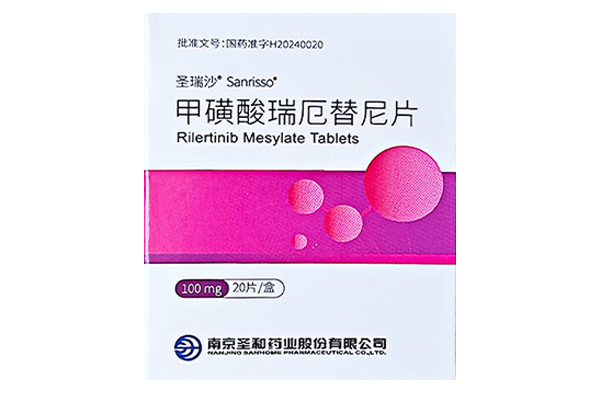
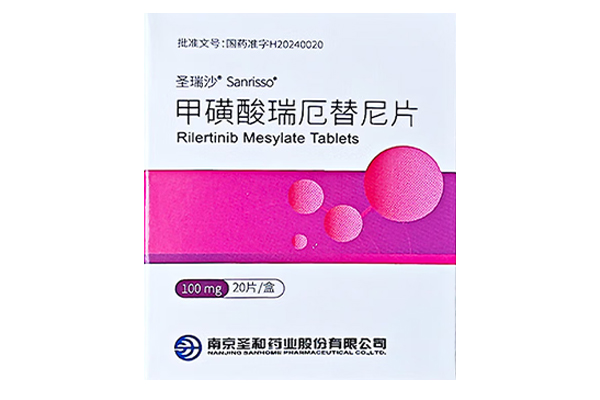
Rilertinib Mesylate Tablets are convenient to administer with a favorable safety profile; no routine dose adjustment is required for elderly patients, and flexible dose adjustment can be implemented based on the individual safety and tolerability of patients.

 AuthenticGuaranteeFast DeliveryPrivacy
 Rilertinib Mesylate Tablets is China’s first third-generation epidermal growth factor receptor tyrosine kinase inhibitor (EGFR-TKI) with a unique molecular structure, and it holds patents in multiple countries including China and the United States.
This product is indicated for:
First-line treatment of adult patients with locally advanced or metastatic non-small cell lung cancer (NSCLC) harboring epidermal growth factor receptor (EGFR) exon 19 deletions or exon 21 (L858R) substitution mutations.
Treatment of adult patients with locally advanced or metastatic non-small cell lung cancer (NSCLC) who have experienced disease progression during or after prior treatment with epidermal growth factor receptor (EGFR) tyrosine kinase inhibitors (TKIs) and are confirmed positive for the EGFR T790M mutation by testing.
Rilertinib should be administered under the supervision of an oncologist with extensive clinical experience.
Prior to treatment with Rilertinib, it is first necessary to confirm the epidermal growth factor receptor (EGFR) mutation status. The presence of EGFR exon 19 deletions, exon 21 (L858R) substitution mutations, or EGFR T790M mutations must be identified using an approved detection method (see Precautions for details).
The recommended dose of Rilertinib is 200 mg, taken orally once daily, until disease progression or intolerable toxicity occurs.
Rilertinib may be taken with or without food. It is recommended to take the medication at approximately the same time each day, swallow the tablet whole with a full glass of water, and do not chew or crush it. If a dose of this product is missed, the missed dose should be taken if the interval until the next scheduled dose is more than 12 hours.
Treatment may be temporarily suspended or the dose reduced based on the individual patient's safety and tolerability. If dose reduction is required, the dose should be reduced to 100 mg taken orally once daily.
This product is contraindicated in patients with hypersensitivity to Rilertinib or any of its excipients.
At the recommended dose, common adverse reactions include gastrointestinal disorders (diarrhea, nausea), blood and lymphatic system disorders (anemia), and skin and subcutaneous tissue disorders (rash).
Some patients experienced serious adverse reactions.
Adverse reactions led to treatment interruption in some patients, with the associated adverse reactions including elevated blood creatine phosphokinase, diarrhea, nausea and vomiting. A small number of patients required dose reduction due to adverse reactions, and all such adverse reactions were infrequent. A small number of patients permanently discontinued the medication due to adverse reactions.
Common abnormal laboratory findings included elevated blood creatine phosphokinase, decreased white blood cell count, elevated serum creatinine, elevated aspartate aminotransferase, elevated alanine aminotransferase, elevated blood creatine phosphokinase MB and decreased platelet count.
Contraception
Men and women of childbearing potential should avoid conception during treatment with this product and continue to use effective contraceptive measures for 3 months after the completion of treatment. The risk of decreased exposure to hormonal contraceptives cannot be ruled out when such contraceptives are used concomitantly with this product.
Pregnancy
No data are available on the use of this product in pregnant women, and the potential safety risks to the fetus are currently unknown. Based on its mechanism of action, administration of this product in pregnant women may cause harm to the fetus.
Lactation
It is unknown whether this product or its metabolites are excreted in human milk. It is recommended that breastfeeding be discontinued during treatment with this product and for at least 3 months after the last dose.
The safety and efficacy of this product in children or adolescents under 18 years of age have not been established.
In clinical studies of this product, a certain proportion of elderly patients (aged ≥65 years) were enrolled. Available clinical study data indicate that the safety profile of elderly patients is not significantly different from that of the overall population, and no dose adjustment is required when the product is used under the guidance of a physician.
For more detailed drug information, please consult the official package leaflet.
If any issues arise, please contact us immediately.
Email:haiousales@gmail.com
Copyright 2024 @ haiouhealth.com All right reserved SEAGULL HEALTH


