
SEAGULL HEALTH
Your health,We care!
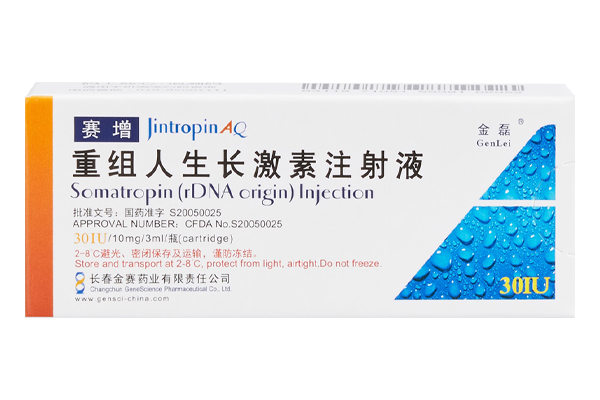
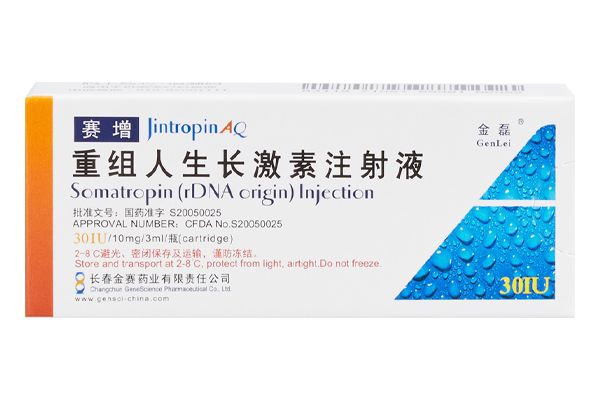
Recombinant Human Growth Hormone (rhGH) Injection is a humanized protein prescription drug prepared by genetic recombination technology, with consistent structure and function as endogenous growth hormone.

 AuthenticGuaranteeFast DeliveryPrivacy
 As a core drug in the global growth hormone therapy field, domestic Recombinant Human Growth Hormone Injection has achieved full coverage of dosage forms including powder, aqueous solution and long-acting preparation, broken the market monopoly of imported drugs, and provided cost-effective treatment options for different patient groups.
1、For the treatment of growth retardation in children caused by endogenous growth hormone deficiency.
2、For the treatment of short stature in children caused by Noonan syndrome.
3、For the treatment of short stature or growth disorder in children caused by SHOX gene deficiency.
4、For the treatment of short stature in children caused by achondroplasia.
5、For the treatment of growth disorder in girls caused by gonadal dysgenesis (Turner syndrome).
6、For the treatment of short stature in children born small for gestational age (SGA) who fail to catch up with growth by the age of 2 years.
7、For the treatment of growth disorder in children caused by Prader-Willi syndrome (PWS).
8、For the treatment of idiopathic short stature (ISS).
9、For the treatment of short bowel syndrome in adults receiving nutritional support.
10、For the treatment of growth hormone deficiency caused by confirmed hypothalamic-pituitary diseases and significant growth hormone deficiency diagnosed by two different growth hormone stimulation tests.
11、For the treatment of severe burns.
For growth retardation in children caused by endogenous growth hormone deficiency
The dosage is individualized. The recommended dosage is 0.1–0.15IU/kg body weight per day (0.033–0.050mg/kg body weight per day), administered subcutaneously once daily.
Treatment course: Recommended until epiphyseal closure, or as directed by the physician.
For short stature in children caused by Noonan syndrome
The recommended dosage is 0.033–0.066mg/kg body weight per day, administered subcutaneously once daily.
Treatment course: Recommended until epiphyseal closure, or as directed by the physician.
For short stature or growth disorder in children caused by SHOX gene deficiency
The recommended dosage is 0.05mg/kg body weight per day (0.35mg/kg body weight per week), administered subcutaneously.
Treatment course: Recommended until epiphyseal closure, or as directed by the physician.
For short stature in children caused by achondroplasia
The recommended dosage is 0.15IU/kg body weight per day (0.05mg/kg body weight per day) or 1.05 IU/kg body weight per week (0.35mg/kg body weight per week), administered subcutaneously.
Treatment course: Recommended until epiphyseal closure, or as directed by the physician.
For growth disorder in girls caused by gonadal dysgenesis (Turner syndrome)
The recommended dosage is 0.14IU/kg body weight per day (0.05mg/kg body weight per day) or 1.4 mg/m² body surface area per day (4.3 IU/m² body surface area per day), administered subcutaneously once daily.
Treatment course: Recommended until epiphyseal closure, or as directed by the physician.
For short stature in children caused by small for gestational age (SGA)
The recommended dosage is 0.033–0.066mg/kg body weight per day, administered subcutaneously.
Treatment course: Recommended until epiphyseal closure, or as directed by the physician.
For growth disorder in children caused by Prader-Willi syndrome (PWS)
The recommended dosage is 0.035mg/kg body weight per day or 1.0mg/m² body surface area per day, administered subcutaneously once daily.
Treatment course: Recommended until epiphyseal closure, or as directed by the physician.
For idiopathic short stature (ISS)
The recommended dosage is 0.15IU/kg body weight per day (0.05 mg/kg body weight per day), administered subcutaneously once daily.
Treatment course: Recommended until epiphyseal closure, or as directed by the physician.
For short bowel syndrome in adults receiving nutritional support
The recommended dosage is 0.3IU/kg body weight per day (0.1 mg/kg body weight per day), administered subcutaneously once daily. The maximum daily dosage shall not exceed 24IU (8mg).
Treatment course: Recommended for continuous treatment of 4 weeks.
Dose adjustment may be made according to the severity of fluid retention and arthralgia/carpal tunnel syndrome during treatment:
For moderate cases: Symptomatic treatment with analgesics or dose reduction to 0.15IU/kg body weight per day (0.05mg/kg body weight per day) administered subcutaneously once daily, with the maximum daily dosage of 12 IU (4mg).
For severe cases: Discontinue growth hormone administration for up to 5 days. After symptoms resolve, resume treatment at a dosage of 0.15IU/kg body weight per day (0.05mg/kg body weight per day) administered subcutaneously once daily, with the maximum daily dosage of 12IU (4mg). If severe symptoms recur or do not resolve within 5 days, discontinue growth hormone treatment.
For adult replacement therapy
The dosage shall be individualized. It is usually recommended to start with a low dose, e.g., 0.5IU per day (0.17mg per day) or a maximum of 0.02 IU/kg body weight per day (0.007mg/kg body weight per day).
The dosage may be gradually adjusted to 0.04IU/kg body weight per day (0.013mg/kg body weight per day) based on the treatment results after 1–2 months.
The serum insulin-like growth factor-I (IGF-I) level can be used as a reference for dosage adjustment. The dosage should be reduced with increasing age.
For the treatment of severe burns
The recommended dosage is 0.2–0.4 IU/kg body weight per day (0.067–0.133mg/kg body weight per day), administered subcutaneously once daily.
Treatment course: Generally about 2 weeks.
Contraindicated for growth-promoting therapy in patients with completely closed epiphyses.
Contraindicated in critically ill patients with severe systemic infections during the acute shock stage of the body.
Contraindicated in patients with known hypersensitivity to growth hormone or its preservatives.
Contraindicated in patients with active malignant tumors. Any pre-existing malignant tumors must be inactive, and tumor treatment must be completed prior to growth hormone therapy. Growth hormone therapy should be discontinued if there is evidence indicating a risk of tumor recurrence. Since growth hormone deficiency may be an early sign of pituitary tumors (or other rare brain tumors), such tumors must be ruled out before treatment. Growth hormone shall not be administered to any patients with potential progression or recurrence of intracranial tumors.
Contraindicated in patients with acute critical illnesses who develop complications following open-heart surgery, abdominal surgery, or multiple accidental traumas.
Contraindicated in the event of acute respiratory failure.
Contraindicated in patients with proliferative or severe non-proliferative diabetic retinopathy.
Contraindicated in pediatric patients with Prader-Willi syndrome who have severe obesity, a history of upper airway obstruction or sleep apnea, or severe respiratory impairment, due to the risk of sudden death.
This drug may cause transient hyperglycemia, which usually alleviates gradually with prolonged medication, and blood glucose levels can return to normal after drug withdrawal.
Clinical observations have shown that approximately 1% of children with short stature experience adverse reactions, the common ones are as follows:
Transient pain, numbness, redness and swelling at the injection site.
Edema, arthralgia or myalgia (caused by fluid retention in the body).
These reactions mostly occur at the initial stage of medication, and their incidence gradually decreases with the extension of treatment duration, and rarely affect daily activities.
Some patients may produce drug antibodies after long-term use of recombinant human growth hormone. Generally, these antibodies have low binding capacity and will not affect the treatment effect. However, if it is found that the growth improvement of the patient fails to meet expectations after treatment, it is necessary to consider testing the antibody level. When the antibody concentration exceeds 2 mg/L, the efficacy of the drug may be reduced.
Not recommended for use.
In terms of pharmacology, toxicology and pharmacokinetics, growth hormone shows no significant differences between children and adults. It can be used safely in children based on body weight.
No systematic clinical studies have been conducted on the use of this drug in the elderly.
For more detailed drug information, please consult the official package leaflet.
If any issues arise, please contact us immediately.
Email:haiousales@gmail.com
Copyright 2024 @ haiouhealth.com All right reserved SEAGULL HEALTH


