
SEAGULL HEALTH
Your health,We care!
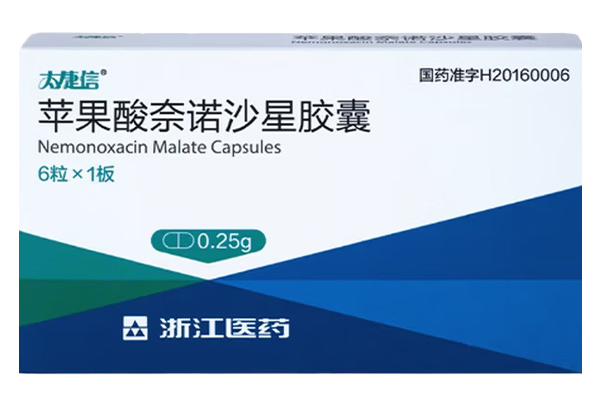
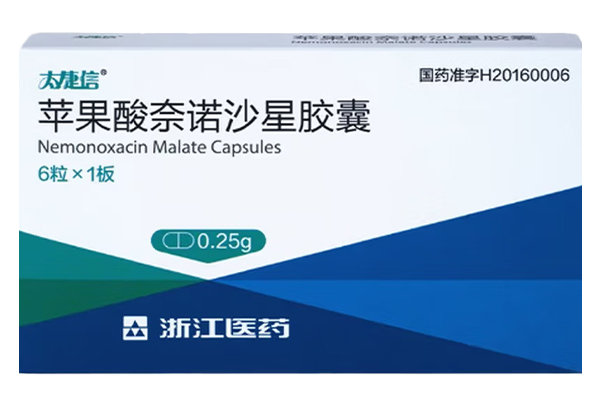
Nemonoxacin is the world’s first fluoro-free quinolone antibacterial agent. It breaks through the structural characteristics of traditional quinolone drugs, broadens the antibacterial spectrum and reduces the probability of drug-resistant mutations.

 AuthenticGuaranteeFast DeliveryPrivacy
 Nemonoxacin was approved for marketing in China in 2016 and was also granted the Qualified Infectious Disease Product (QIDP) designation and Fast Track designation by the U.S. FDA. It exhibits excellent pharmacokinetic properties, including rapid oral absorption, high bioavailability and a long half-life, enabling once-daily administration for adult patients.
To reduce the emergence of drug-resistant bacteria and ensure the efficacy of nemonoxacin and other antibacterial agents, this product is indicated solely for the treatment of infections proven or highly suspected to be caused by susceptible bacteria. When selecting or modifying antibacterial treatment regimens, results of bacterial culture and susceptibility testing should be taken into consideration. In the absence of data from such tests, empirical treatment should be administered based on local epidemiological data and pathogen susceptibility patterns.
Bacterial culture and susceptibility testing should be performed prior to treatment to isolate and identify the pathogenic bacteria causing the infection and determine their susceptibility to this product.
Treatment with this product may be initiated pending the results of the above tests, and appropriate therapeutic measures should be selected once the test results are available.
As with other agents in this class, during treatment with this product, periodic bacterial culture and susceptibility testing should be conducted to monitor the sustained susceptibility of pathogens to the antibacterial agent and enable the timely detection of the development of bacterial resistance.
This product is indicated for the treatment of mild to moderate community-acquired pneumonia (CAP) in adults (≥18years of age) caused by nemonoxacin-susceptible pathogens, including Streptococcus pneumoniae, Staphylococcus aureus, Haemophilus influenzae, Haemophilus parainfluenzae, Moraxella catarrhalis, Klebsiella pneumoniae, as well as Mycoplasma pneumoniae, Chlamydia pneumoniae and Legionella pneumophila.
This product is indicated for the treatment of diseases corresponding to its approved indications. The general dosage and administration are as follows, but the regimen must be ultimately determined by clinicians based on the severity of the disease.
(1) Dosage in Patients with Normal Renal Function
For oral administration, the recommended dosage for adults is 0.5g (2capsules) once daily. The treatment course is for a consecutive 7-10 days, which may be appropriately prolonged according to the patient's condition.
(2) Dosage Adjustment in Patients with Renal Impairment
No dosage adjustment is necessary for patients with a creatinine clearance rate > 50mL/min. No research data are available regarding the use of this product in patients with moderate to severe renal impairment.
(3) Dosage Adjustment in Patients with Hepatic Impairment
No dedicated pharmacokinetic study has been conducted in patients with hepatic impairment. However, this product undergoes minimal metabolism via the liver.
(4) Geriatric Patients
No dosage adjustment is required for elderly patients aged 60 to 70 years.
(1) Drug Interactions with Chelating Agents: Antacids, Aluminum, Metal Cations, and Calcium-containing Supplements
Magnesium-containing antacids, aluminum preparations, and metal cation products (e.g., iron-containing formulations) should not be taken concomitantly with this product. These agents should be administered at least 2 hours after taking this product. No dosage adjustment is needed when calcium-containing supplements are used together with this product.
(2) Food and Nemonoxacin Oral Formulations
Administration of this product may be independent of food intake. However, it is still recommended to take this product on an empty stomach, at least 1 hour before or 2 hours after meals.
(3) Fluid Intake in Patients Receiving This Product
Cases of crystalluria and casturia induced by quinolone drugs have been reported previously. Although no such cases were observed in the clinical trials of this product, it is still recommended that patients receiving this product maintain adequate fluid intake to prevent the potential formation of highly concentrated urine.
This product is contraindicated in patients hypersensitive to quinolone drugs, pregnant and lactating women, and patients under 18 years of age.
Clinical reports in recent years have shown that quinolone drugs may cause the following severe adverse effects:
Musculoskeletal System: Tendinitis (manifested as local redness, swelling, heat, and pain), tendon rupture (e.g., sudden Achilles tendon rupture).
Nervous System: Induction of epileptic seizures, and occurrence of mental abnormalities such as hallucinations.
Cardiovascular System: Prolongation of the QT interval (abnormal cardiac electrical activity), torsades de pointes (a life-threatening arrhythmia).
Other Risks: Phototoxic reactions (abnormal skin sensitivity to ultraviolet light), exacerbation of myasthenia gravis (aggravated limb weakness).
Special Precautions:
Elderly patients over 60 years of age, those taking hormonal drugs, and organ transplant recipients have a higher risk of tendon injury.
Although this product is a new type of fluoro-free quinolone drug and the above typical adverse effects have not been observed, close monitoring of drug reactions is still required.
If symptoms such as sudden joint pain, pinprick-like tingling, or confusion occur, inform medical staff immediately.
Important adverse reactions that may occur during treatment include (but are not limited to):
Severe allergic reactions (e.g., dyspnea, generalized rash);
Liver function impairment (manifested as jaundice, decreased appetite);
Intestinal flora imbalance (severe diarrhea requires investigation for pseudomembranous colitis);
Abnormal fluctuations in blood glucose levels.
It is recommended that patients monitor vital signs such as blood pressure and heart rate during treatment and seek medical attention immediately if any discomfort occurs. Medical staff should fully document and promptly report adverse drug reactions.
This product is classified as Category C in pregnancy risk classification (animal studies have shown potential effects on fetal development, but human data are lacking). Therefore, its use is generally prohibited unless clinicians assess that the therapeutic benefits far outweigh the fetal risks.
Safety data are also lacking. Breastfeeding must be suspended during treatment. Its use should only be considered when the necessity of treatment far exceeds the risks.
The use in patients under 18 years of age is explicitly prohibited. Temporary articular cartilage damage was observed in young dogs after administration in animal studies.
Renal function indicators should be tested before administration, and the dosage should be accurately adjusted based on the test results. Renal function should be rechecked regularly during treatment.
For more detailed drug information, please consult the official package leaflet.
If any issues arise, please contact us immediately.
Email:haiousales@gmail.com
Copyright 2024 @ haiouhealth.com All right reserved SEAGULL HEALTH


