
SEAGULL HEALTH
Your health,We care!
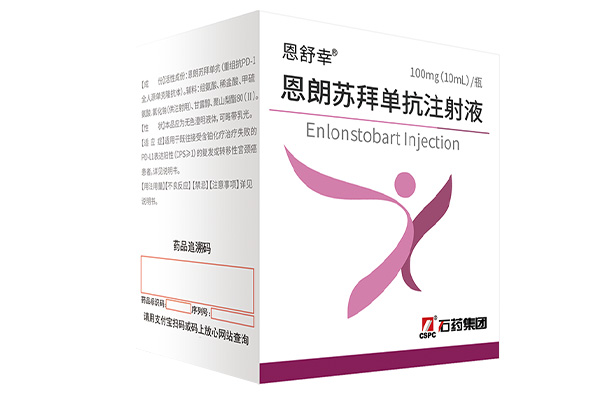
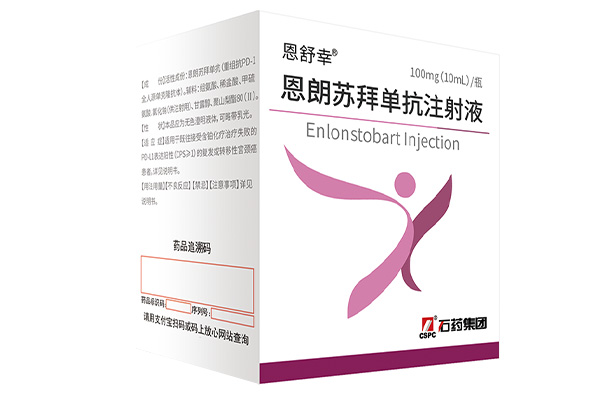
Enlonstobart Injection features a fully human design that significantly reduces its immunogenicity, resulting in a lower incidence of immune-related adverse events (irAEs).

 AuthenticGuaranteeFast DeliveryPrivacy
 Enlonstobart Injection is the first PD-1 monoclonal antibody in China approved for the cervical cancer indication, and it is currently recommended in a number of authoritative guidelines, including the Clinical Application Guidelines for Immune Checkpoint Inhibitors in Cervical Cancer (2024 Edition) and the Clinical Application Guidelines for Immune Checkpoint Inhibitors in Gynecologic Malignancies (2025 Edition).
Enlonstobart Injection is indicated for the treatment of patients with recurrent or metastatic cervical cancer who have positive PD-L1 expression (CPS≥1) and failed prior platinum-containing chemotherapy.
This product has been conditionally approved for marketing based on surrogate endpoints. Clinical endpoint data have not yet been obtained, and its efficacy and safety await further confirmation in the post-marketing phase. The full approval of this indication will be contingent on whether the ongoing confirmatory randomized controlled clinical trials can demonstrate the clinical benefit of Enlangsubai Monoclonal Antibody therapy.
This product must be administered under the supervision of a physician or pharmacist experienced in malignant tumor treatment.
For the use of this product in recurrent or metastatic cervical cancer, patients with positive PD-L1 expression should be selected, and PD-L1 expression shall be assessed by a detection method approved by the National Medical Products Administration (NMPA).
The recommended dosage of this product is 240mg, administered by intravenous infusion once every 2 weeks, until disease progression or unacceptable toxicity occurs.
Atypical responses may be observed (e.g., temporary tumor enlargement or the appearance of new lesions within the first few months, followed by tumor regression). If a patient’s clinical symptoms are stable or continuously relieved, even in the presence of preliminary radiological evidence of disease progression, continuation of treatment with this product may be considered based on the evaluation of overall clinical benefit, until confirmed disease progression is documented.
Patients with a hypersensitivity reaction to enlangsubai monoclonal antibody or any of its excipients are contraindicated.
Adverse reactions with an incidence of ≥10% include: anemia, elevated aspartate aminotransferase (AST), rash, elevated alanine aminotransferase (ALT), decreased white blood cell count, decreased neutrophil count, hypothyroidism, and proteinuria.
The incidence of Grade 3 or higher adverse reactions was 25.2%. Adverse reactions with an incidence of ≥1% in this category include: anemia, decreased neutrophil count, decreased white blood cell count, decreased lymphocyte count, decreased platelet count, hypokalemia, hypertriglyceridemia, elevated gamma-glutamyl transferase (GGT), elevated alanine aminotransferase (ALT), hepatic dysfunction, and infectious pneumonia.
Pregnancy
There are no available data on the use of this product in pregnant women. Human immunoglobulin G (IgG) is known to cross the placental barrier, and as an IgG4 subclass antibody, this product may diffuse from the maternal body to the developing fetus. This product is not recommended for use during pregnancy unless the clinical benefit outweighs the potential risk.
Lactation
It is not known whether this product is excreted in human milk, nor its effects on breastfed infants or human milk production. Since human IgG is excreted in breast milk, this product may pose potential risks to breastfed infants. Therefore, breastfeeding women are advised to discontinue breastfeeding during treatment with this product and for at least 6 months after the last dose.
Contraception
Women of childbearing potential should use effective contraceptive measures during treatment with this product and for 6 months after the last dose.
Fertility
No studies have been conducted to evaluate the effects of enlangsubai monoclonal antibody on fertility in either sex. Thus, the impact of this product on male and female fertility is unknown.
The safety and efficacy of enlangsubai monoclonal antibody have not been established in pediatric and adolescent patients under 18 years of age.
In the current clinical studies of this product, elderly patients aged ≥65 years accounted for 17.6% of the total study population. For elderly patients (≥65 years) versus non-elderly patients (<65 years), the incidence of adverse drug reactions (ADRs) of all grades was 84.5% and 78.2%, respectively; the incidence of Grade 3 or higher ADRs was 22.4% and 23.6%, respectively; the incidence of ADRs leading to treatment interruption was 10.3% and 15.1%, respectively; and the incidence of ADRs leading to permanent treatment discontinuation was 6.9% and 3.7%, respectively. No overall differences in safety or efficacy were observed between elderly and non-elderly patients receiving this product.
For more detailed drug information, please consult the official package leaflet.
If any issues arise, please contact us immediately.
Email:haiousales@gmail.com
Copyright 2024 @ haiouhealth.com All right reserved SEAGULL HEALTH


