
SEAGULL HEALTH
Your health,We care!
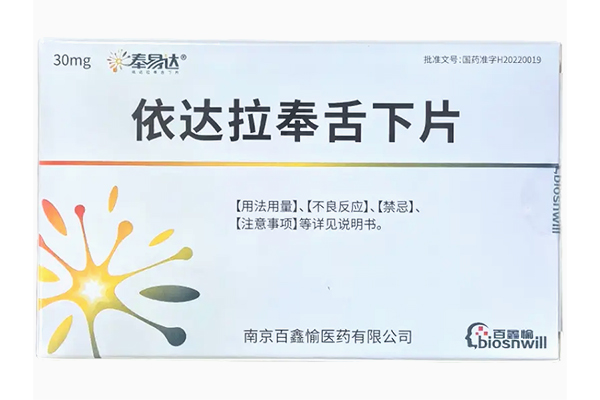
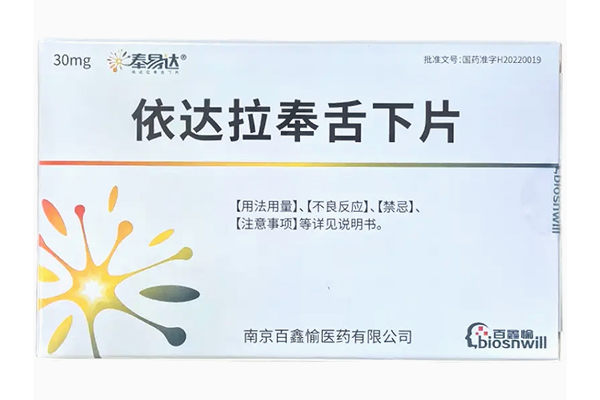
With edaravone as its sole active ingredient, Edaravone Sublingual Tablets have successfully overcome the technical challenges of edaravone, including difficulty in oral administration, low bioavailability and susceptibility to oxidation.

 AuthenticGuaranteeFast DeliveryPrivacy
 Edaravone Sublingual Tablets are a class of neuroprotective prescription drugs. Its convenient administration route eliminates the limitations of intravenous infusion associated with traditional edaravone injections, significantly improves the autonomy and long-term medication adherence of ALS patients, and is more suitable for home-based treatment scenarios.
Edaravone Sublingual Tablets can inhibit the progression of functional impairment caused by amyotrophic lateral sclerosis (ALS).
For inhibiting the progression of functional impairment caused by amyotrophic lateral sclerosis (ALS), the administration route is sublingual administration of 2 tablets (60mg) once daily. A treatment course is generally defined as a 28-day cycle combining an administration period and a drug withdrawal period, and such cycles are repeated continuously.
For the first course: Administer the drug continuously for 14 days, followed by a 14-day drug withdrawal period.
For courses starting from the second one: Administer the drug on 10 days within a 14-day administration period, followed by a 14-day drug withdrawal period.
(1) This product may cause deterioration of renal dysfunction, and is contraindicated in patients with severe renal dysfunction.
(2) This product is contraindicated in patients with a history of hypersensitivity to any component of this product.
The principal adverse reactions include rash, hepatic dysfunction, hypertension, increased γ-GTP, positive urine glucose, etc.
Acute renal insufficiency, nephrotic syndrome: Acute renal insufficiency and nephrotic syndrome may occur. Close monitoring of renal function and careful observation are required. If symptoms such as decreased renal function or oliguria are observed, administration should be discontinued and appropriate measures should be taken (see [Precautions]).
Severe hepatitis, hepatic dysfunction, jaundice: Severe hepatitis such as acute severe hepatitis, hepatic dysfunction accompanied by significant increases in AST (GOT), ALT (GPT), ALP, γ-GTP, LDH, bilirubin and other indicators, and jaundice may occur. Close monitoring of liver function and careful observation are required. If abnormalities are detected, administration should be discontinued and appropriate measures should be taken (see [Precautions]).
Thrombocytopenia, granulocytopenia: Thrombocytopenia and granulocytopenia may occur. Close monitoring of hematological examinations and careful observation are required. If abnormalities are detected, administration should be discontinued and appropriate measures should be taken (see [Precautions]).
Disseminated intravascular coagulation syndrome (DIC): Disseminated intravascular coagulation syndrome may occur. Regular hematological examinations should be performed. If manifestations suggestive of disseminated intravascular coagulation syndrome appear, administration should be discontinued and appropriate measures should be taken.
Acute lung injury: Acute lung injury accompanied by fever, cough, dyspnea and abnormal chest X-ray findings may occur. The patient's condition should be closely observed. If the above symptoms appear, administration should be discontinued and appropriate measures such as administration of adrenocortical hormones should be taken.
Rhabdomyolysis: Rhabdomyolysis may occur. Careful observation is required. If symptoms such as myalgia, fatigue, increased CK (CPK), and increased myoglobin in blood and urine are detected, administration should be discontinued and appropriate measures should be taken.
Shock, allergic reactions: Shock and allergic reactions (such as urticaria, hypotension, dyspnea, etc.) may occur. Careful observation is required. If abnormalities are detected, administration should be discontinued and appropriate measures should be taken.
Women who are pregnant or may become pregnant should avoid using this product as much as possible (the safety of administration during pregnancy has not been established).
Lactating women should discontinue breastfeeding during the administration of this product.
The safety of this product in pediatric patients has not been established
(Acute cerebral infarction: limited clinical experience; ALS: no clinical experience).
In general, the physiological functions of the elderly are declined. If adverse reactions occur, administration should be discontinued and appropriate management should be implemented.
In particular, a considerable number of fatal events have been reported in the elderly population, which requires close attention.
For more detailed drug information, please consult the official package leaflet.
If any issues arise, please contact us immediately.
Email:haiousales@gmail.com
Copyright 2024 @ haiouhealth.com All right reserved SEAGULL HEALTH


