
SEAGULL HEALTH
Your health,We care!
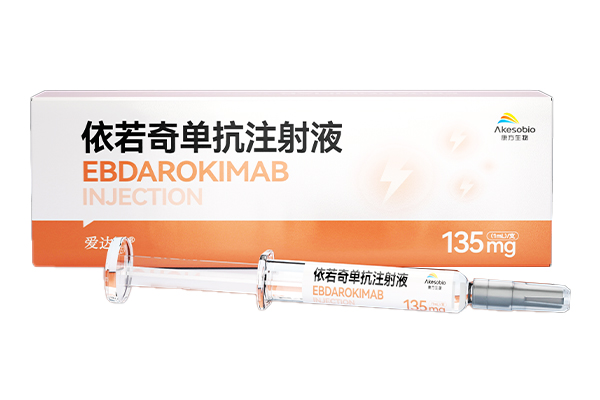
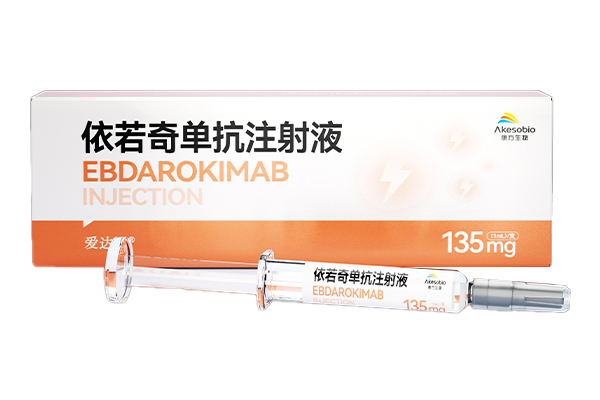
Ebdarokimab Injection is characterized by definite efficacy (with a PASI75 response rate of nearly 80% at Week 16 and stable efficacy at Week 52), low incidence of adverse reactions (all<5%), no severe hypersensitivity reactions, and convenient administration.

 AuthenticGuaranteeFast DeliveryPrivacy
 Ebdarokimab Injection was approved for marketing by the National Medical Products Administration (NMPA) in April 2025, which fills the domestic R&D gap for IL-12/IL-23 targeted drugs and provides a highly effective, long-acting, safe and cost-effective new option for long-term standardized treatment for patients with moderate to severe plaque psoriasis.
Ebdarokimab Injection is indicated for the treatment of adult patients with moderate to severe plaque psoriasis who are non-responsive to, have contraindications to, or are intolerant of other systemic therapies such as cyclosporine, methotrexate (MTX), or PUVA (psoralen and ultraviolet A).
Ebdarokimab Injection should be used under the guidance and supervision of physicians experienced in the diagnosis and treatment of the indications for this product.
Dosage
The recommended dose of ebdarokimab is 135 mg administered by subcutaneous injection at Weeks 0 and 4, followed by the same dose every 12 weeks thereafter.
Ebdarokimab is for subcutaneous injection only. Use a prefilled syringe to administer the injection subcutaneously at non-tender, bruised, swollen or indurated areas of the abdomen. The abdomen is the preferred injection site; if the abdomen is not suitable, the upper arm or thigh may be selected. Avoid injecting into psoriatic lesion sites as much as possible.
Prior to administration, visually inspect the solution for particulates or discoloration. Do not use if the solution is discolored or contains visible particulates.
This product should be stored in a refrigerator at 2–8°C. After removal from the refrigerator, allow the product to reach room temperature for at least 30 minutes at room temperature, and complete the injection within 8 hours. Do not use other warming methods. Complete the injection within 2 minutes after removing the needle cap.
Patients with hypersensitivity to any component of ebdarokimab are contraindicated.
Patients with clinically significant active infections (e.g., active tuberculosis) are contraindicated.
Overall Safety: A total of 1520 patients were treated. The incidence of all adverse reactions was <5%, mostly mild. The incidences of treatment-emergent adverse events (TEAE) and treatment-related adverse events (TRAE) were both lower than those in the placebo group.
Infection Risk: Lower than that in the placebo group. Only 1 case of severe cellulitis was reported (incidence <0.1%), and the patient recovered.
Allergic Reactions: No severe hypersensitivity reactions were observed. Mild allergy-related symptoms such as urticaria and allergic dermatitis occurred in 1.1% of patients, and the incidence of injection site reactions was 0.3%.
Immunogenicity: The positive rate of anti-drug antibodies (ADA) was 9.5%, and the positive rate of neutralizing antibodies (NAb) was 7.5%, which does not affect medication safety or efficacy.
Others: Malignant tumors are rare (0.2 cases per 100 patient-years), unrelated to this product, and no other serious adverse events of other systems have been reported.
Females of Childbearing Potential
Females of childbearing potential should use effective contraceptive measures during treatment and for at least 120 days after treatment.
Pregnancy and Neonates
There are insufficient data on the use of ebdarokimab in pregnant women. Animal studies have not found any direct or indirect harmful effects of this product on pregnancy, embryo/fetal development, delivery or postnatal development. As a precaution, it is advisable to avoid the use of this product during pregnancy.
Lactation
No clinical trials of ebdarokimab treatment have been conducted in pregnant women. In addition, no studies have been performed to determine whether ebdarokimab is present in human milk or to evaluate the effects of ebdarokimab on breastfed infants. It is unknown whether ebdarokimab is systemically absorbed when ingested by infants through breast milk.
Since ebdarokimab may cause adverse reactions in breastfed infants, it is necessary to weigh the benefits of breastfeeding for the infant against the benefits of the product for the female patient to decide whether to discontinue breastfeeding or terminate the treatment with this product during treatment and for 120 days after treatment.
Fertility
The effect of ebdarokimab on human fertility has not been evaluated.
The safety and efficacy of this product in pediatric patients under 18 years of age have not been established.
Based on population pharmacokinetic analysis, in the age range of 18.0 to 78.0 years, age has no significant effect on the pharmacokinetic characteristics of ebdarokimab. Compared with younger patients, no obvious differences in safety were observed in patients aged 65 years and older receiving this product.
Due to the limited number of patients aged 65 years and older, it is insufficient to determine whether their efficacy and safety are different from those of younger patients.
For more detailed drug information, please consult the official package leaflet.
If any issues arise, please contact us immediately.
Email:haiousales@gmail.com
Copyright 2024 @ haiouhealth.com All right reserved SEAGULL HEALTH


