
SEAGULL HEALTH
Your health,We care!
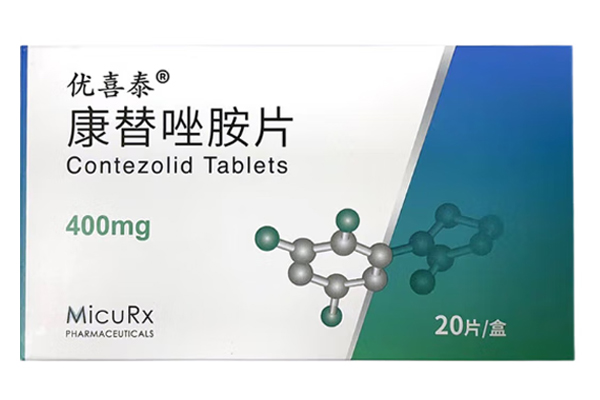
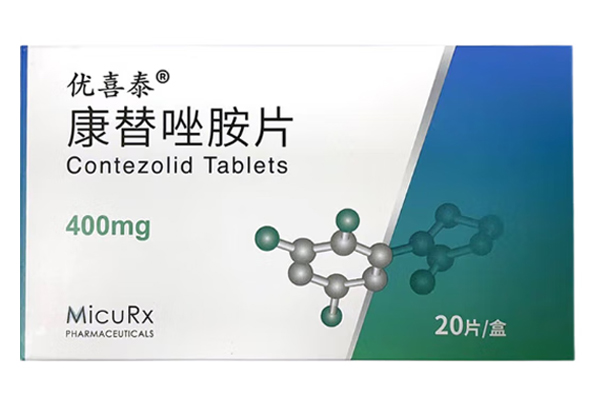
Approved for marketing in June 2021 via NMPA’s priority review, Contezolid Tablets offers a new domestic treatment for complicated skin and soft tissue infections (cSSTIs) in China.

 AuthenticGuaranteeFast DeliveryPrivacy
 Contezolid Tablets, with its innovative "trifluoro non-coplanar" structural design, has significantly reduced non-specific binding to human mitochondrial ribosomes; compared with Linezolid, a drug of the same class, it shows a markedly lower risk of myelosuppression and peripheral neurotoxicity.
Contezolid Tablets is indicated for the treatment of complicated skin and soft tissue infections (cSSTIs) caused by susceptible strains of Staphylococcus aureus (methicillin-susceptible and methicillin-resistant strains), Streptococcus pyogenes or Streptococcus agalactiae.
To reduce the emergence of bacterial resistance and ensure the efficacy of Contezolid and other antibacterial agents, this product should only be used for the treatment of infections proven or highly suspected to be caused by susceptible bacteria. This product is not indicated for the treatment of Gram-negative bacterial infections. If a Gram-negative bacterial infection is proven or suspected to be present concomitantly, combination therapy with anti-Gram-negative antibacterial agents is recommended.
When selecting or adjusting the antibacterial treatment regimen, bacterial culture and susceptibility testing should be performed to isolate and identify the pathogenic bacteria causing the infection and determine their susceptibility to this product.
In the absence of susceptibility data from such tests, empirical therapy should be administered based on local epidemiological data including bacterial resistance patterns and antibacterial susceptibility profiles. This product may be initiated prior to obtaining the aforementioned susceptibility results, and targeted etiologic therapy should be selected after the results are available.
Adults: This product should be taken orally with meals or within 30 minutes after a meal, 800 mg (2 tablets) per dose, once every 12 hours. The recommended course of treatment (continuous treatment days) is 7 to 14 days, which may be appropriately prolonged as clinically indicated. The total course of treatment shall be determined by the treating physician based on the site and severity of infection and the patient's response to treatment.
In Phase I clinical studies, healthy subjects who received oral Contezolid Tablets with meals continuously for 28 days exhibited good tolerability and safety; the safety and efficacy of Contezolid Tablets for use beyond 28 days have not been evaluated yet.
Contezolid Tablets are contraindicated in patients with known hypersensitivity to contezolid, other oxazolidinone drugs, or any other components of this product.
Common: Nausea, headache, rash;
Rare: Abnormal liver function, allergic reaction.
Pregnancy
There are no clinical studies of this product conducted in pregnant women. Animal studies have shown that this product can cross the placental barrier of pregnant rats, and maternal use of Contezolid may result in fetal exposure to the drug. It is recommended that pregnant women use this product with caution. If use is necessary, it can only be administered after a physician evaluates and confirms that the potential benefits to the mother outweigh the potential risks to the fetus.
Women of childbearing potential or their partners should adopt reliable contraceptive measures during the administration of this product.
Lactation
Contezolid can be excreted into the milk of lactating rats, and the drug concentration in milk is similar to that in maternal plasma. It is unknown whether Contezolid is excreted into human milk. Since many drugs can be excreted in human milk, this product should be used with caution in lactating women; if use is necessary, breastfeeding should be discontinued during the treatment with this product.
Clinical evaluation of efficacy and safety of this product has not been conducted in pediatric patients, and its safety and efficacy in pediatric populations remain unclear.
In Phase III clinical studies, a total of 354 patients received Contezolid Tablets treatment, of which 40 were elderly patients aged 65 to 75 years. Subgroup analysis showed that the clinical cure rate, incidence of adverse reactions, and types of common adverse reactions in elderly patients of this age group were similar to those in the full analysis population; however, it cannot be excluded that some elderly patients may be more sensitive to this product. At present, there are no clinical data on elderly patients over 75 years of age taking this product.
Results from population pharmacokinetics (PPK) studies of subjects in Phase I, II, and III clinical trials of this product showed that the body weight-corrected steady-state area under the plasma concentration-time curve (AUCss) of Contezolid was relatively close between patients <60 years old and ≥60 years old (difference <10%, p>0.05). This indicates that age has no significant impact on the AUCss of Contezolid, and no dosage adjustment is required based on age.
If any issues arise, please contact us immediately.
Email:haiousales@gmail.com
Copyright 2024 @ haiouhealth.com All right reserved SEAGULL HEALTH


