
SEAGULL HEALTH
Your health,We care!
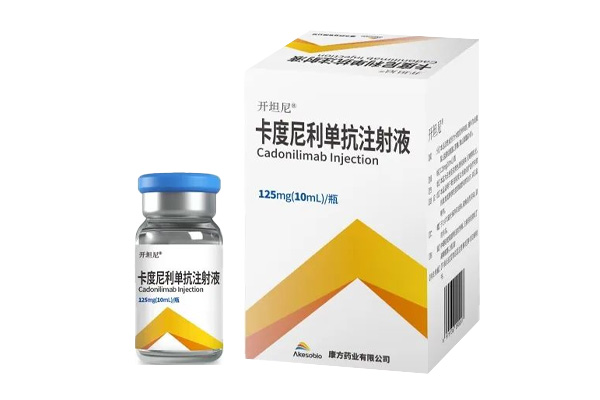
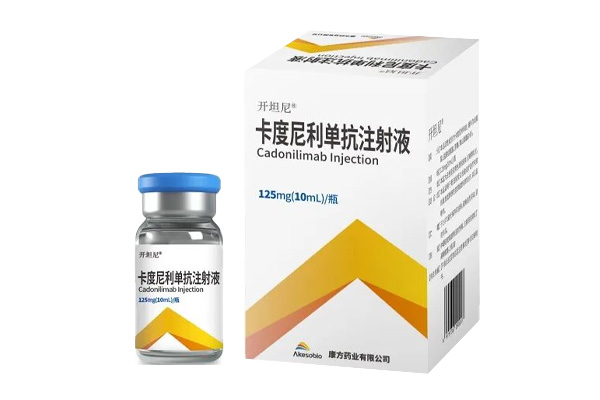
Cadonilimab Injection, an independently developed Class 1 innovative biological drug by Kangfang Pharmaceutical Co., Ltd., is the world's first approved PD-1/CTLA-4 bispecific antibody, with its R&D supported by the national Major New Drug Creation Program.

 AuthenticGuaranteeFast DeliveryPrivacy
 Cadonilimab Injection adopts an original bifunctional tetravalent antibody structure, which can simultaneously block the PD-1 and CTLA-4 immune checkpoints with high affinity, enabling the drug to selectively accumulate in tumor tissues. It potently activates anti-tumor immunity while greatly reducing systemic adverse reactions, and has significantly superior safety to the traditional combination therapy of PD-1 and CTLA-4 monoclonal antibodies.
1.Cadonilimab is indicated for the treatment of patients with recurrent or metastatic cervical cancer who have failed prior platinum-containing chemotherapy.
Cadonilimab has been granted conditional approval for marketing based on a surrogate endpoint, with clinical endpoint data not yet obtained. Its efficacy and safety are to be further confirmed in post-marketing studies. The full approval of this indication will be contingent upon the confirmation of clinical benefit of Cadonilimab treatment by the ongoing confirmatory clinical trials.
2.Cadonilimab, in combination with fluoropyrimidine- and platinum-containing chemotherapy, is indicated for the first-line treatment of patients with locally advanced unresectable or metastatic gastric or gastroesophageal junction adenocarcinoma.
Cadonilimab Injection must be administered under the guidance of a physician or pharmacist with experience in cancer treatment.
Cervical Cancer
Cadonilimab Injection is administered via intravenous infusion at a recommended dose of 6 mg/kg every 2 weeks until disease progression or unacceptable toxicity occurs.
Gastric or Gastroesophageal Junction Adenocarcinoma
This product is administered via intravenous infusion at a recommended dose of 10 mg/kg every 3 weeks until disease progression or unacceptable toxicity occurs.
When Cadonilimab is administered in combination with chemotherapy, Cadonilimab should be given first via intravenous infusion, followed by chemotherapy after an interval of at least 30 minutes. See also the prescribing information for the administered chemotherapeutic agents.
Atypical treatment responses may be observed (e.g., temporary tumor enlargement or the appearance of new lesions within the first few months of treatment, followed by tumor regression). If the patient’s clinical symptoms are stable or continuously alleviated, even if there is initial radiological evidence of disease progression, continuation of treatment with this product may be considered based on the judgment of overall clinical benefit, until confirmed disease progression is documented.
Patients with hypersensitivity to cadonilimab or any of the excipients listed in this medicinal product.
In patients receiving monotherapy with this product, adverse reactions of all grades were reported. Adverse reactions with an incidence of ≥10% included rash, anemia, hypothyroidism, elevated aspartate aminotransferase, elevated alanine aminotransferase, pruritus and proteinuria.
The incidence of grade 3 and above adverse reactions was noted, with those having an incidence of ≥1% including anemia, infusion-related reactions, hypokalemia and decreased platelet count.
Adverse reactions with an incidence of ≥10% included decreased platelet count, decreased neutrophil count, anemia, decreased white blood cell count, elevated aspartate aminotransferase, fever, hypoproteinemia, elevated alanine aminotransferase, elevated blood bilirubin, hypokalemia, anorexia, elevated amylase, fatigue, rash, diarrhea, hypothyroidism, hyperglycemia and proteinuria.
The incidence of grade 3 and above adverse reactions was recorded, with those having an incidence of ≥1% including decreased platelet count, decreased neutrophil count, anemia, hypokalemia, decreased white blood cell count, fatigue, decreased lymphocyte count, rash, elevated aspartate aminotransferase, elevated gamma-glutamyl transferase, elevated amylase, anorexia, hyperglycemia, infusion-related reactions, elevated blood bilirubin, diarrhea, elevated lipase, hyponatremia, diabetic ketoacidosis, pulmonary inflammation, hepatitis, nephritis, hyperlipidemia and fever.
Pregnancy
No data are available on the use of this product in pregnant women. Based on the mechanism of action, pharmacology and toxicology of this product, its use during pregnancy is not recommended unless the clinical benefit outweighs the potential risk.
Lactation
It is not known whether this product is excreted in human milk, nor its effects on breastfed infants or milk production. Since human IgG is excreted in breast milk, this product may pose a potential risk to breastfed infants. Therefore, lactating women are advised to discontinue breastfeeding during the treatment and for at least 4 months after the last dose.
Contraception
Females of childbearing potential are advised to take effective contraceptive measures during the treatment with this product and for 4 months after the last dose.
Fertility
No studies have been conducted to evaluate the effects of this product on fertility in either sex, and thus its impact on male and female fertility remains unknown.
The safety and efficacy of this product in patients under 18 years of age have not been established.
No significant differences in safety were observed in elderly patients receiving monotherapy with this product or combination therapy with chemotherapy. Population pharmacokinetic analysis showed that age has no notable effect on the pharmacokinetic (PK) profile of cadonilimab. It is recommended that elderly patients use this product with caution under the guidance of a physician, and no dose adjustment is required.
For more detailed drug information, please consult the official package leaflet.
If any issues arise, please contact us immediately.
Email:haiousales@gmail.com
Copyright 2024 @ haiouhealth.com All right reserved SEAGULL HEALTH


