
SEAGULL HEALTH
Your health,We care!
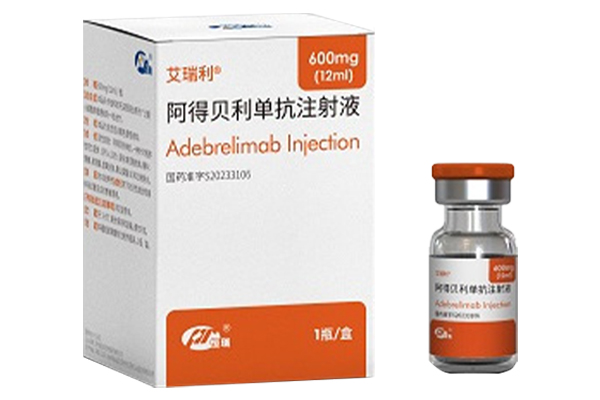
Adebrelimab is the first domestically developed PD-L1 inhibitor in China to be approved for the indication of extensive-stage small cell lung cancer, and it achieves improved safety and a more pure pharmacological effect through dual molecular modifications.

 AuthenticGuaranteeFast DeliveryPrivacy
 The launch of Adebrelimab has broken the monopoly of imported PD-L1 inhibitors in the field of immunotherapy for small-cell lung cancer (SCLC), and the drug has been granted a Grade I Preferred Recommendation in domestic authoritative clinical practice guidelines for lung cancer such as those issued by the CSCO.
Adebrelimab combined with carboplatin and etoposide is used for first-line treatment of extensive-stage small cell lung cancer.
Adebrelimab must be administered under the supervision of a physician experienced in malignant tumor treatment.
Extensive-stage small cell lung cancer (ES-SCLC): During the induction phase, administer Adebrelimab at a dose of 20mg/kg in combination with chemotherapy once every 3 weeks for a total of 4 to 6 treatment cycles. The maintenance phase follows the induction phase, during which Adebrelimab is administered alone at a dose of 20mg/kg once every 3 weeks, until disease progression or unacceptable toxicity occurs.
When Adebrelimab is administered in combination with chemotherapy, intravenous infusion of Adebrelimab should be given first, with chemotherapy administered after an interval of at least 30 minutes. See the prescribing information for the relevant chemotherapy agents for additional details.
Atypical responses may be observed (e.g., temporary enlargement of tumors or the appearance of new small lesions within the first few months, followed by subsequent tumor regression). If the patient’s clinical condition remains stable, even in the presence of initial evidence of disease progression, continuation of treatment with this product may be considered based on an assessment of the overall clinical benefit, until confirmed disease progression or unacceptable toxicity occurs.
Temporary interruption or permanent discontinuation of dosing may be required based on the individual patient’s safety and tolerability. Dose escalation or reduction is not recommended.
Consult the treating physician for specific discontinuation circumstances.
Contraindicated in patients with hypersensitivity reactions to Adebrelimab or its excipients.
Common adverse reactions (≥10%) included: proteinuria, fatigue, elevated adrenocorticotropic hormone (ACTH), elevated aspartate aminotransferase (AST), elevated thyroid-stimulating hormone (TSH), elevated blood bilirubin, elevated alanine aminotransferase (ALT), anemia, anorexia and rash.
Common Grade ≥3 adverse reactions included: pneumonitis, elevated ALT, elevated AST, elevated conjugated bilirubin, hepatic function abnormality, anemia and hypokalemia.
Common adverse reactions (≥10%) included: leukopenia, neutropenia, anemia, elevated ALT, thrombocytopenia, elevated AST, anorexia, nausea, elevated gamma-glutamyl transferase (GGT), fatigue and hypothyroidism.
Common Grade ≥3 adverse reactions included: neutropenia, leukopenia, thrombocytopenia, anemia, lymphopenia, elevated ALT and hypertension.
Pregnancy
No data are available on the use of this product in pregnant women. Animal studies have demonstrated that PD-L1-blocking antibodies exhibit embryofetal toxicity. IgG is known to cross the placental barrier; as an IgG4 antibody, this product may pass from the maternal circulation to the developing fetus.
Use of this product during pregnancy is not recommended unless the potential clinical benefit outweighs the risk.
Lactation
It is not known whether this product is excreted in human milk, nor its effects on breastfed infants or maternal milk production. Since human IgG is excreted in breast milk, this product may pose a potential risk to breastfed infants. Therefore, lactating women are advised to discontinue breastfeeding during treatment with this product and for at least 2 months after the last dose.
Contraception
Women of childbearing potential should use highly effective contraceptive measures during treatment with this product and for 2 months after the last dose.
Fertility
No studies have been conducted to evaluate the effects of Adebrelimab on fertility in either sex, and thus its impact on male and female fertility remains unknown.
The safety and efficacy of Adebrelimab in pediatric patients and adolescents under 18 years of age have not been established.
In clinical trials of this product, patients aged 65 years and older accounted for 29.0% of the total study population. No clinically meaningful differences in safety or efficacy were observed between elderly patients (≥65 years) and younger patients (<65 years).
For more detailed drug information, please consult the official package leaflet.
If any issues arise, please contact us immediately.
Email:haiousales@gmail.com
Copyright 2024 @ haiouhealth.com All right reserved SEAGULL HEALTH


